 Builders Merchants Journal – BMJ Publishing to Builders Merchants and the UK merchanting industry for more than 95 years
Tradeaze founder Jack Hopkins talks to Fiona Russell Horne about how he scaled up from delivery by bike to raising £3m and scaling 3,000 drivers.
From bike courier to national platform, Jack Hopkins is aiming to reshape how builders’ merchants approach their delivery options. Tradeaze, the on-demand delivery platform for builders’ merchants he founded is helping them to win back lost sales, ease fleet pressure and meet rising customer expectations.
“We come at it from two angles,” says Hopkins. “One is enabling merchants to become that Deliveroo-style service to their customers. They can claw back sales they might otherwise miss due to simple logistics limitations.”
Where a customer might once have to be told, ‘we can’t do it’, there is an increasing opportunity for them to hear ‘yes, sure. We can Tradeaze it to you within the hour’, bringing in extra sales that would have gone elsewhere.
The second benefit is operational. “We’re also taking pressure off internal fleets. Merchants can scale up and down depending on demand. With seasonal dips such as holidays, Christmas, or even prolonged bad weather, we become a service they can lean on,” Hopkins explains.
The idea for Tradeaze came from Hopkins’ own experience as an electrician, initially a one-man band doing domestic rewires, then running a team of about 10 engineers working on commercial fit-outs and kitchens, he says that the logistics issue was constant.
“I was forever running parts around,” he recalls. “Whenever you needed something urgently, merchants just couldn’t get it there now. And it wasn’t just me, it was every tradie on site.”
So he got on his bike to develop a solution, operating at first on his home turf of Fulham in South London. “Tradespeople would message me on WhatsApp, I’d cycle to the branch, collect the parts and take them to site,” Hopkins explains. “I’d send a photo back as proof of delivery.”
But it eventually proved difficult to scale. “Getting more customers was expensive and slow,” he says. “So I pivoted to working with merchants, and that’s when it started to really take off.”
It was still a lean operation, too lean, really. Hopkins says: “It was still just me, then my cousin joined, so we had a van and a bike. But I knew we needed funding and proper tech to grow.”
Bringing in a technical co-founder was what transformed the business. “My co-founder Reuben started building the platform, which got us off WhatsApp and onto a booking portal,” he says, which allowed the company to target larger merchants.
“We started with smaller stores, then moved up,” he explains. “MP Moran was one of the first bigger names, then Travis Perkins gave us a trial.”
Not surprisingly, that trial proved pivotal. “It went really well and from there we used that relationship to win others,” he says. “That’s how it builds. We’ve now got nearly 3,000 drivers on the platform, and we operate from the south coast up to Manchester and Leeds.”
The Tradeaze customer base includes major merchants such as MP Moran, Travis Perkins, Jewson, SIG and MKM.
The company has also secured investment, raising £3m last year, with a further round of funding underway. “It’s Uber-style logistics, but built for building materials distribution,” he says.
At its core, Tradeaze offers a merchant booking portal designed for speed and simplicity, with ease of adoption a key selling point.
There’s no setup fee, no subscription,” Hopkins says. “Merchants can price a job instantly, choose vehicle type and book within seconds.” That flexibility helps drive uptake. “They can test us with no risk,” he explains. “If they use us, they use us. If not, there’s no cost.
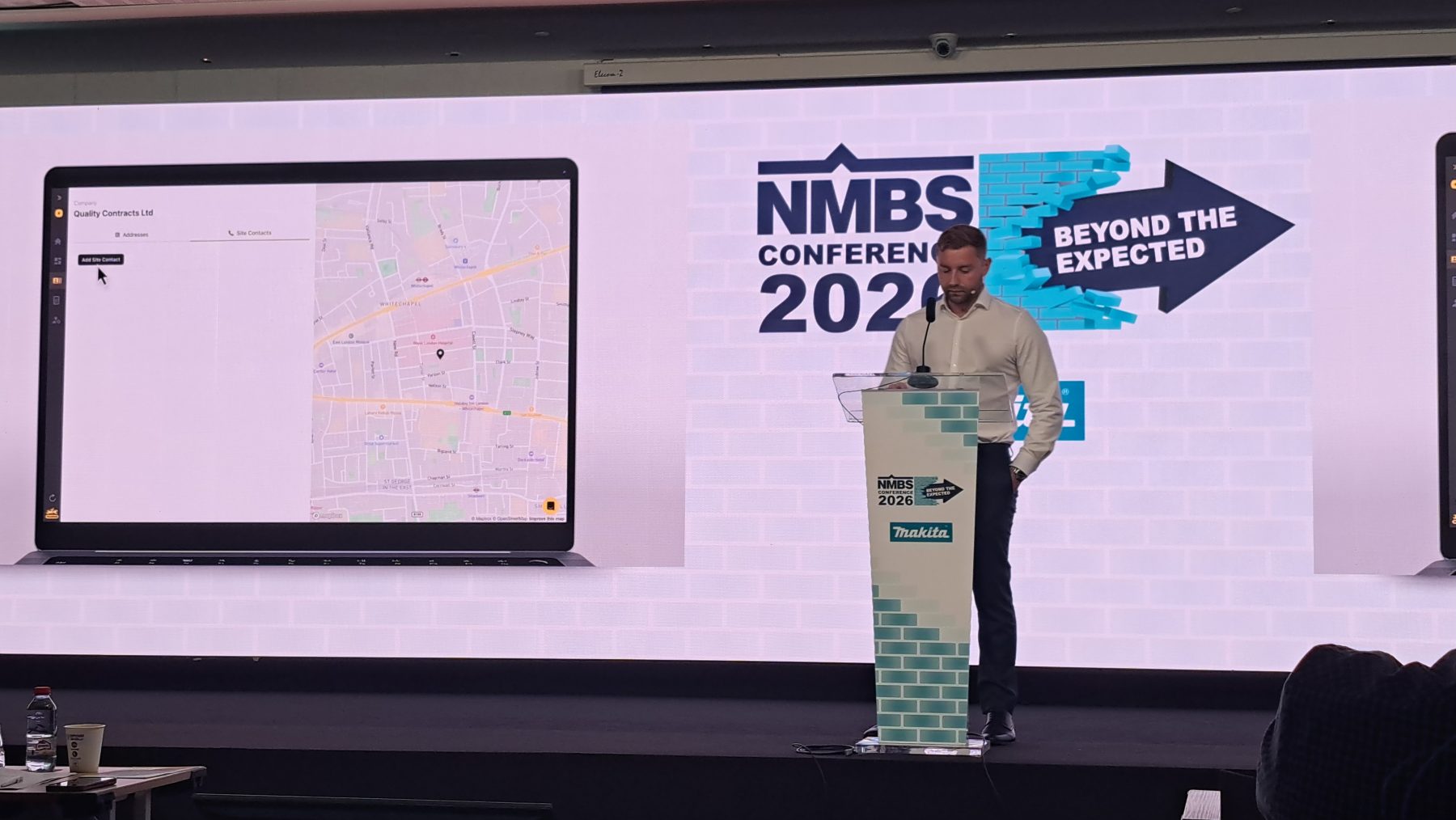
“General courier firms struggle with building materials,” he says. “We’ve built tools that understand the shapes and sizes, so you don’t get the wrong vehicle turning up.”
Behind the scenes, the platform optimises routes and pricing, with proprietary tech and AI constantly working out the most efficient way to move goods.
The next phase is integrating Tradeaze into merchants’ online checkouts. “If merchants don’t offer same-day delivery online, they’ll fall behind. Customers expect it now. They can pick standard delivery or Tradeaze for same-day delivery,” he says. “It’s the same service, just built into the website.”
The growth of the platform reflects changing trade buying habits. “Younger tradespeople are increasingly ordering online. They want that immediacy without needing to call the branch.”
Another benefit is the way Tradeaze can help merchants to optimise the efficiency of their delivery offer. “Sometimes merchants are sending small loads on large lorries,” Hopkins says. “We’re building AI tools that can tell them when a courier service would be more cost-effective. When you think of all the hidden costs that are built into each delivery made by a vehicle on a merchant’s own fleet, it may well be that sending a small order via Tradeze is far cheaper.”
A key part of the model’s growth is access to freelance owner-drivers that merchants probably couldn’t work with directly. Tradeaze onboards those drivers, vets them and manages compliance, giving merchants flexible capacity without the administrative burden.
The focus for Tradeaze is now on growth. “We’ve spent years building the infrastructure,” Hopkins says. “Now it’s about ramping up and building brand awareness.”
That includes targeting independent merchants. “We’re strong with the nationals. Now it’s about bringing in regional and independent players across the UK. We want every merchant to be able to say ‘yes’ when a customer needs something urgently,” he says. “That’s what this is all about.”