 Builders Merchants Journal – BMJ Publishing to Builders Merchants and the UK merchanting industry for more than 95 years
Suzannah Adey, External Affairs and ESG Lead at Mira Showers
We are in the midst of a water crisis, with the UK facing water shortages of 5bn litres a day by 2055. The pressure on such a crucial resource is a well-known challenge faced by the construction industry, with water use being an essential aspect of building infrastructure.
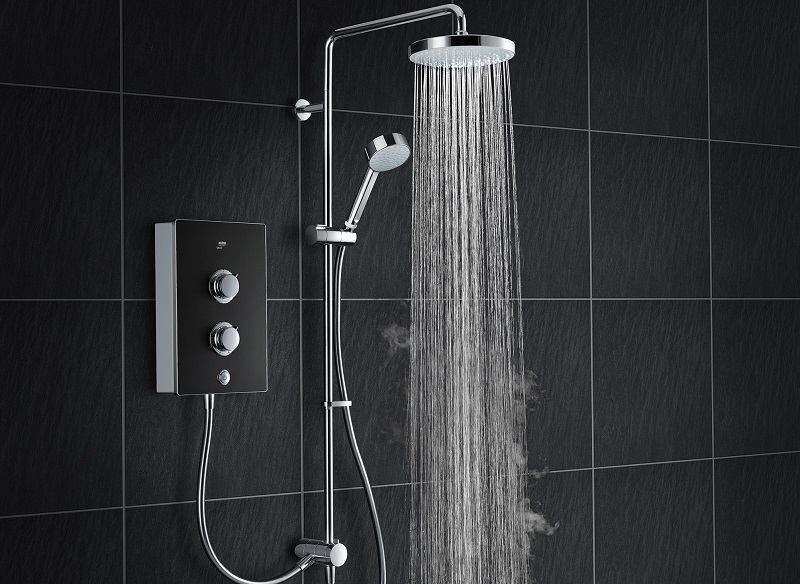
It is vital that action is taken to reduce water use as continuing to use it as we do now risks higher bills, increased water scarcity, and fewer new homes being built. Reducing water use, and in turn the energy required to heat it will be crucial in ensuring developers comply with the Future Homes Standard, which mandates that new residential properties emit 75% to 85% fewer carbon emissions.
The planned introduction of the mandatory water efficiency labelling scheme will go some way to making it easier for developers to know which fittings are most water efficient. It will also support them to choose the right products to install to qualify for water companies’ incentive offers. However, they are only one part of the puzzle.
Recent concerns from the Builders Merchants Federation have highlighted the potential for consumer confusion around the UK’s new water efficiency labels. Their argument is that there is already an established industry scheme in place and a single label may not accurately reflect how products perform in real-world conditions.
For builders’ merchants, and in turn building specifiers, the more pressing question is how these labels interact with wider building performance requirements, and whether they risk oversimplifying a much more complex design challenge.
The risk when policy focuses too heavily on product labelling
Focusing strictly on product metrics while ignoring user behaviour is a critical flaw in water policy.
Alongside Mandatory Water Efficiency Labelling, it is also vital to consider that specifying lower-flow products will not necessarily automatically reduce consumption.
Late last year the government rolled out its Part G consultation and proposed updating its current water calculator methodology, which assesses the specification of water-using fittings and appliances installed in a dwelling and applies fixed assumptions about their frequency and duration of use. The consultation proposed reducing the mandatory average water use limit for new homes from 125 litres per person per day (l/p/d) to 105 l/p/d, alongside a tighter optional standard of 100 l/p/d in areas of serious water stress.
However, as per a report from the University of Surrey, Beyond the Water Flow Rate: Water Pressure and Smart Timers Impact Shower Efficiency, to which Mira Showers contributed, a range of factors influence water use. Low flow equipment should not be relied upon in order to reduce consumption. Overly restrictive flow rates can lead to people taking longer showers, or even tampering with the fittings, undermining the very savings that a water efficiency label indicates a product can achieve.
To ensure regulations are not undermined by user behaviour, Mira proposed that the government should update the water calculator to include a ringfenced daily allowance for showers – for example 48 litres per person per day based on a 6 l/min flow rate – drawing on the principles of the fittings-based approach already used elsewhere in Part G, for example for baths. Evidence suggests that, when combined with behaviour-change measures such as shower timers, this approach can deliver meaningful and durable reductions in household water use.
For builders’ merchants, this means customer communications must increasingly move beyond labels and towards broader discussions around performance and usability. A highly rated product on paper only delivers value if it also meets expectations around experience.
Why water and energy need to be discussed together
For builders’ merchants, the conversation around water efficiency is becoming inseparable from the wider drive towards low-carbon homes. While much of the focus around the Future Homes Standard has centred on technologies such as heat pumps, solar PV and improved fabric performance, an increasingly important question is how homes reduce demand for hot water in the first place.
Research referenced in a SEA paper for Part L 2013 found that domestic hot water already accounts for around 35% of household energy demand, and as homes become more thermally efficient, this could increase to as much as 50%. In other words, hot water is no longer simply a water issue but it is becoming one of the biggest energy issues within the home.
This shift has important implications for specifiers and their customers. Developers are increasingly looking for complete efficiency solutions that help them balance water use, energy performance and future compliance requirements. Technologies such as Waste Water Heat Recovery for Showers (WWHRS), which recover heat from shower wastewater and reuse it to reduce hot water demand, demonstrate how reducing water consumption and reducing energy consumption can go hand-in-hand. Yet there is growing concern that future compliance pathways may place greater emphasis on energy generation technologies alone, potentially overlooking proven demand-reduction measures that deliver consistent savings throughout the year.
For merchants, this highlights why product ratings and labels should be viewed as only part of the picture. Developers are increasingly seeking advice on how products contribute to the overall performance of a home, whether that’s lowering water bills, reducing energy demand or supporting Future Homes Standard compliance. As regulation evolves, the industry will benefit from a more joined-up approach that recognises the close relationship between water and energy, enabling merchants, manufacturers and installers to deliver solutions that improve whole-home performance rather than optimising a single metric in isolation.
Looking ahead
If the UK’s goal is to build genuinely water-efficient homes, it’s important the focus is widened from product labelling to integrated system design. Labels can help inform purchasing decisions, but they cannot account for the wider factors that determine how much water and energy a home consumes. Merchants that understand this broader picture will be best placed to support housebuilders to make informed choices that support compliance requirements and create long lasting value for both people and planet.