 Builders Merchants Journal – BMJ Publishing to Builders Merchants and the UK merchanting industry for more than 95 years
Project Overview
A high-end residential property located in the outskirts of a city recently underwent a significant renovation to replace its ageing wooden roof terrace decking. The existing timber decking, weathered by years of exposure to the elements, had begun to warp, crack, and show signs of decay, compromising both the aesthetics and safety of the terrace. The property owner sought a sustainable, durable, and visually appealing solution that would not only restore the terrace’s functionality but also enhance its overall design.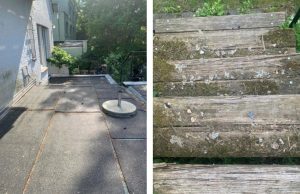
Solution: Sand-Coloured Bamboo Decking and Substructure
After evaluating various materials, the decision was made to replace the old wood decking with a sand-coloured bamboo decking laid on a bamboo substructure. The installation was completed using adjustable pedestals, which allowed for precise leveling and ensured long-term stability on the roof terrace.
Installation Process
The renovation began with the careful removal of the existing timber decking. Once the old decking was cleared, the surface was prepared for the new installation. The bamboo substructure was laid out, designed to provide a stable and durable foundation for the decking. Adjustable pedestals were used to support the bamboo substructure, allowing for easy adjustment to accommodate any inconsistencies in the terrace surface and ensuring a perfectly level decking installation. The sand-coloured bamboo decking from Ambooo was then installed, creating a seamless and elegant finish. The choice of sand colour added a light, modern aesthetic that complemented the surrounding urban landscape while maintaining a natural look. As the substrate has some variations in level our adjustable pedestals were used to create a level Bamboo substructure for the decking. For this project a plan was also provided to the client for the installer to work from. Benefits of Bamboo Decking and Substructure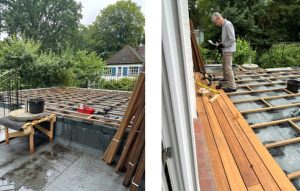
Sustainability: Bamboo is a rapidly renewable resource, with a growth cycle of just 3-5 years compared to 20-30 years for traditional hardwoods. This makes it an environmentally friendly option compared to timber, which contributes to deforestation. Additionally, bamboo production typically involves fewer chemicals than composite decking, which often contains plastics and other synthetic materials.
Durability: Bamboo is known for its exceptional strength and hardness, which makes it an ideal material for outdoor decking. It is naturally resistant to weathering, insects, and rot, offering a lifespan comparable to or even exceeding that of high-quality timber and composite decking. The bamboo substructure also benefits from these properties, ensuring the entire decking system is robust and long-lasting.
Aesthetic Appeal: The sand-coloured bamboo decking provides a modern, natural look that enhances the visual appeal of the terrace. Unlike some composite decking materials, which can look artificial, bamboo retains a natural wood-like appearance, with subtle grain patterns and colour variations that add character to the space.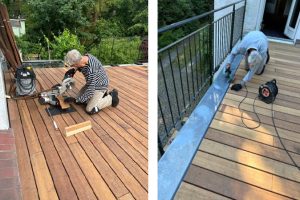
Low Maintenance: Bamboo decking requires minimal maintenance compared to timber, which needs regular staining or sealing to protect against the elements. The natural resistance of bamboo to moisture and UV radiation means it will retain its appearance with just occasional cleaning.
Ease of Installation: The use of adjustable pedestals with the bamboo substructure simplified the installation process. These pedestals allowed for precise levelling, even on an uneven roof surface, reducing installation time and labour costs. The pedestals also provide improved drainage and ventilation beneath the decking, further enhancing its durability.
Cost-Effectiveness: While the initial cost of bamboo decking can be higher than some traditional timber options, the long-term savings in maintenance, durability, and environmental benefits make it a cost-effective solution. Additionally, bamboo decking is often more affordable than high-end composite decking, offering a premium finish without the associated premium price tag.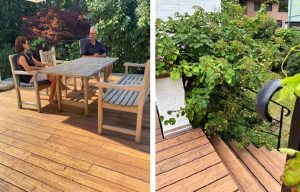
As Ambooo decking is a very hard and durable product cutting should be done using a high quality hard steel blade. The edges can then be sanded to create a consistent chamfer to match the uncut decking boards.
Conclusion
The roof terrace renovation with sand-coloured Ambooo decking and a bamboo substructure has transformed the space into a modern, sustainable, and durable outdoor living area. The new decking not only enhances the aesthetic appeal of the terrace but also offers superior performance in terms of durability, maintenance, and environmental impact compared to traditional timber and composite decking options. The project stands as a testament to the benefits of choosing bamboo for outdoor decking applications, particularly in challenging environments like roof terraces.