 Builders Merchants Journal – BMJ Publishing to Builders Merchants and the UK merchanting industry for more than 95 years
Safely controlling and overseeing access to depots can be uniquely challenging, particularly at sites with complex layouts and those that provide access to both vehicles and pedestrians.
Without well-defined and understood rules regarding safe movement, operators run the risk of accidents, confusion and blockages harming people and impacting operational efficiency. To ensure safe, secure and smooth operations, access events should be closely monitored.
For facility managers wishing to optimise existing access security measures, the below post explores the growing importance of safely managing vehicle and visitor movement in depots.
The importance of vehicle and visitor access management
Many hazards can form across depots due to the presence of heavy machines and materials around pedestrians and incoming vehicles. Without clear rules and demarcations leveraged to direct traffic towards safe and easily-managed areas, collisions and confusion can lead to accidents and blockages which could seriously harm visitors and cause unwanted downtime.
Poor access management can cause issues relating to:
- Health and safety: Heavy machines and materials can seriously harm passersby if access events aren’t well-managed; heavy vehicles injure ≈1,500 people each year.
- Operational efficiency: Collisions, spilled materials and blockages can lead to long periods of unwanted downtime while issues are addressed and roads are cleared.
- Compliance: Facility operators must comply with regulations laid out by agencies like HSE that outline rules for maintaining separation between people and vehicles.
How to improve vehicle and visitor management in depots
By taking steps to better-manage vehicle and visitor movement in depots, operators can proactively prevent accidents, improve operational efficiency and enhance site-wide security outcomes. To improve vehicle and visitor management, consider the following measures.
Use cameras to improve visibility
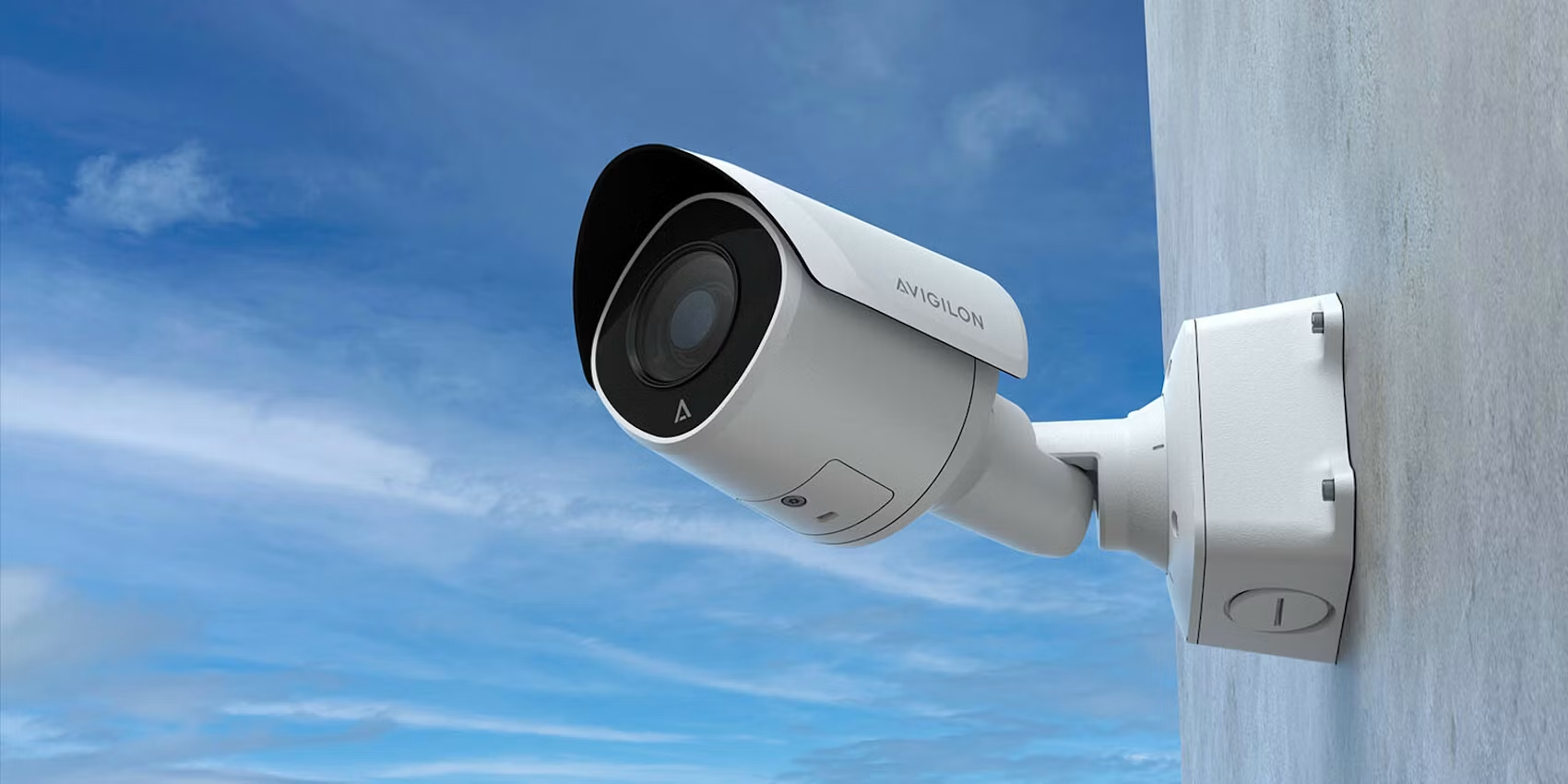
Hard-wearing, high-quality, remote-accessible bullet cameras installed to cover key areas like access gates, main entrances, perimeters and loading bays can help operators identify and address potential hazards ranging from access management issues to security threats.
By leveraging cameras with smart analytics features, leaders can program systems to send real-time alerts warning of specific issues like blocked entry roads and pedestrians entering restricted areas, enabling on-site employees to enact relevant responses swiftly and safely.
Strengthen access control measures
Installing vehicular access control systems at entry gates can help site operators to control occupancy levels and ensure only authorised vehicles are granted facility access, with LPR camera systems enabling staff to use vehicles’ licence plates as unique access credentials.
Pedestrian access can be controlled using token-based access systems that block entry to high-risk areas behind key cards or fobs. Pavement markings can guide pedestrians towards safe walkways and help site operators to maintain separation between people and vehicles.
Adopt digital management solutions
By linking CCTV cameras and access systems to a centralised digital management system, operators can manage safety and security operations remotely from any smart device. If an anomalous entry event or threat is detected, staff can be informed instantly via SMS or email.
Operations can be further enhanced by adopting security management software. With such a solution in place, operators can gather and analyse data from cameras, access systems and incident reports in a single space to better-investigate risks and plan impactful improvements.
Implement strict operational policies
To complement technological measures, operators should implement strict operational rules and policies to help manage vehicle and visitor movement safely. For example, speed limits should be implemented and one-way systems devised for areas that see high-density traffic.
Access and safe movement rules must be clearly communicated to both employees and site visitors. Signs should be installed at depot entrances and around high-risk areas like loading bays detailing rules and policies, with road markings used to direct traffic around the facility.
Final thoughts
The high-traffic and complex nature of depots can expose staff and visitors to wide-ranging hazards, meaning access to key areas of facilities must be strictly managed. By adopting smart technologies and implementing carefully-planned operational policies, operators can better-manage access for vehicles and visitors to minimise risks and streamline operations.