 Builders Merchants Journal – BMJ Publishing to Builders Merchants and the UK merchanting industry for more than 95 years
The UK construction sector saw its sharpest decline in more than five years in October, thanks to weakening order books, political uncertainty, and client caution.
The latest data from the S&P Global UK Construction Purchasing Managers’ Index™ showed that total construction output contracted at the fastest rate since May 2020, with civil engineering and housing projects bearing the brunt of the downturn. Civil engineering activity, in particular, fell sharply, with its index down to 35.4, as firms reported a lack of new work to replace completed projects. Residential building activity also weakened, with an index of 43.6, marking its steepest decline in eight months.
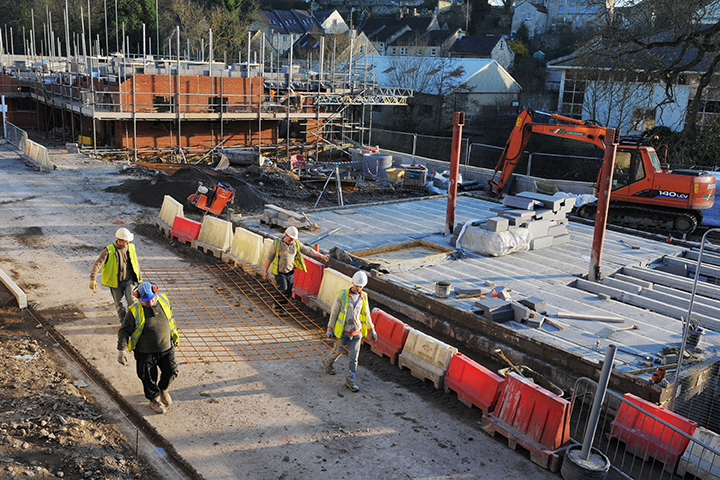
Commercial construction offered a modest bright spot, with the index at 46.3, little changed from September.
Many firms pointed to subdued market conditions, fewer tender opportunities, and delays in client decision-making. Elevated political and economic uncertainty continued to discourage spending, resulting in fewer project starts and a growing number of postponed investments.
Staffing levels fell at the steepest pace in just over five years, with many firms citing cost pressures and the non-replacement of voluntary leavers. Subcontractor usage also dropped, although the decline was less severe than earlier in the year.
Demand for construction products and materials decreased sharply in October, mirroring the broader downturn in output and new orders. However, the reduction in input buying helped to ease pressure on supply chains, with vendor delivery times improving for the third month running. Cost inflation also cooled, reaching its weakest level since October 2024.
Despite the overall gloom, there were tentative signs of stabilisation. Firms reported better availability of subcontractors, improved supplier performance, and a moderation in cost pressures. Optimism about the year ahead ticked higher, reaching its strongest level since July, supported by expectations that lower borrowing costs could eventually help revive client demand.
Tim Moore, economics director at S&P Global Market Intelligence, who compile the survey, said: “The construction sector remained on a negative trajectory in October as weak order books and risk aversion among clients led to another sharp drop in activity. Civil engineering and housing activity have been hardest hit, but there are tentative signs that the pace of decline is starting to ease. Expectations for 2026 are a little more upbeat as firms anticipate some support from lower interest rates and an improved investment climate.”