 Builders Merchants Journal – BMJ Publishing to Builders Merchants and the UK merchanting industry for more than 95 years
Courage, he said, and pointed t’ward the land
This mounting wave will roll us shoreward soon
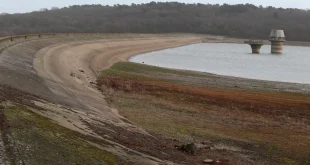
There is a great deal wrong with the way the utility infrastructure in this country has developed in since the great privatisation rush. The problems have been building up ever since, culminating in the almighty mess than South East Water finds itself in. Forgive the parochial nature of today’s blog, but it’s how I know how messed up everything is, because it’s happening on my doorstep, to me, my friends, neighbours and colleagues. South East Water may be in the firing line this time, but this is just the latest. The last few years have seen similar situations across the country with other water companies. And that’s not even taking the sewage spills into account, which is a whole other ball game.
To recap: six weeks after questions were asked in the House about the fact that 24,000 homes in Tunbridge Wells were without running water, relying on bottled water stations set up at various parts of the town, the problems have a) returned to Tunbridge Wells, and b) spread to elsewhere in Kent. And parts of Sussex, which also have the misfortune to have to be South East Water customers.
Nearly 17,000 properties still have no water, or intermittent supplies, with no real idea of when it will be back to whatever normal is. Schools are having to shut once again because they can’t flush the lavatories. My local MP, Mike Martin, has been brilliant, and managed to get tanker-loads of grey water delivered to some of them, so that GCSE and A Level students could take their mocks. Today, apparently saw progress because only three schools are shut in Tunbridge Wells. Yesterday seven were. Businesses, in particular hospitality businesses, already on their knees, are suffering, really suffering, not just from the loss of revenue, but also from the lack of certainty about the endpoint. I have friends who grew up in Africa who say they’ve never seen anything like this.
David Hinton, the CEO of South East Water who was conspicuous by his absence during to problems in December, finally made an appearance in front of a committee in Parliament. When he realised that he really couldn’t avoid it any longer. This was just hours before the supply problems returned, and he put the blame on Royal Tunbridge Wells being a commuter town, where too many people are now working from home, putting more pressure on the water supply. Really?
He also said that there had been a huge increase in housebuilding in the area, which had put undue pressure on the supply situation, that the County Council had been granting planning permission willy-nilly, with scant regard for the need to make sure the infrastructure could cope.
There may well be some truth in what he says. There are many more people working from home, not just in Tunbridge Wells, but across the country. There has been an increase in housebuilding and development across the area. But none of this has happened overnight, neither has it been kept a secret. I’d like to think that if you are CEO of a major utility company, taking home half a million quid a year, that you’d have the wherewithal to work this stuff out and plan for it. At the very least you might have employees whose job it is to help you plan for such eventualities.
I had a look at the South East Water accounts for the past few years. I know that accounts can be written up to hide a multitude of sins and omissions, but a 2022 profit of £83.8m and capital expenditure of £105m, had, a year later turned into a £74.2m loss, despite less cap Ex. Those of you with a memory will know that September 2022 saw Liz Truss’s short-lived Premiership, and Kwasi Kwateng’s even shorter stint at the Treasury. Part of the pair’s legacy was interest rates that rocketed, hitting 6% at one point, catching many with their proverbials down. Bad enough when you’re a householder coming off a low mortgage deal and finding your payments have shot up, far worse if you’re a huge equity and pension-fund-owned corporation that has largely been funded through debt and borrowing. We’ve seen the calamitous effect of that on debt-funded businesses in this sector.
There has been investment in the water infrastructure of late, it’s true, but not enough. A case of too little too late; indeed, the Tory government sold off the sector in the first place because it didn’t want to have to fund the necessary investment. Those corporations and hedge funds to who it sold them presumably just thought ‘happy days’ and pocketed the cash. By its very nature, a privatised utility is set up in such a way that the ultimate owners are supposed to be able to reap the rewards of their investments. Water bills already increased last year – mine doubled – and the one certainty that we can take from the mess of the past six weeks is that they will rise again.
Now it seems the government is considering sending the army in to Kent and Sussex to help manage what Kent County Council has named a ‘Major Incident’. From where I’m sitting it looks like Major Incident has been promoted to General Sh*t-Show.
In other ironic news, we still have a hosepipe ban in Kent.