 Builders Merchants Journal – BMJ Publishing to Builders Merchants and the UK merchanting industry for more than 95 years
Words have no power to impress the mind without the exquisite horror of their reality
A quick trip down memory lane into Year 8 Science. Bear with me reader. When you drop a stone into a pond, how far the ripples last, how far they go, and how ,well, rippley they are, depends on a number of things. The size of the pebble. The shape of the pebble, The viscosity of the water. The number and type of objects already in the pond. Sometimes, it’s down to the motivation of the dropper. A lightly tossed pebble will ripple in a completely different way to a stone that’s thrown in anger.
Events too have ripple-effects that differ, depending on any number of factors. Sometimes the effect is so minimal that you wonder if they ever happened at all. Sometimes those ripples in fact cause other, more devastating effects – the punishing reparations regime for Germany post World War One, for example, were a big part of why World War Two happened: Year 9 history.
Sometimes those ripples cause things to happen to ensure there are no other similar pebbles dropped in any similar ponds. The Grenfell Tower fire is one such event. I’m not sure how much further I can take this pond/pebble analogy, but the ripples from the fire that ripped through the tower block on the night of June 14 2017 are still there.
The Inquiry took eight years to come to its conclusions, and they made very uncomfortable reading for anyone working in the construction sector. There was systematic dishonesty on the part of the cladding manufacturer, false and misleading claims by the insulation manufacturers, indifference and incompetence from the Council and the Tenant Management Organisation, a casual indifference to contractual relations, leading to ‘an unedifying merry-go-round of buckpassing’, complacency and lack of preparation on the part of the London Fire Brigade.
Almost from the outset, there was the realisation that the current system of building regulations had also spectacularly failed the residents of Grenfell Tower, and the subsequent report by Dame Judith Hackitt, identified the need fort a culture change, to ensure a sufficiently robust regulatory system going forward. In a nutshell, manufacturers’ product information, and the traceability of, and accountability for, products made, specified, sold and installed needed sorting. Hence the Golden Thread, and the Code for Construction product Information.
The CCPI is built around the acid tests that product information should be clear, accurate, up-to-date, accessible and unambiguous. It should allow stakeholders – purchasers, specifiers designers, etc – to be able to make informed decisions about which products they choose to use. A massive amount of hard work and effort has gone into developing the Code, and it is still ongoing; it will continue to evolve as the products it covers develop and evolve. It was sorely needed, that much is clear.
That Code itself, however, has ripple effects of its own. I am writing this on the train to Birmingham to take part in a discussion panel at UK Construction Week about the Code, and how manufacturers’ – and merchants’ – adherence to it could affect the ability of those in marketing, public relations and editorial to do our jobs.
It all depends on how you believe that readers use information they read in a trade publication I suppose. But if all my product related pieces ran thus: “X company has launched a new ABC product. It comes in X colours, Y sizes, and is made of Z material” It would be factual, traceable, accurate. But a bit, boring. And eventually, people would stop reading the publication, and I’d be out of a job. If, on the other hand, I took the time to check the accuracy of every single piece of product detail that comes across my desk, it would take me forever. I would get about three things written a week, and, pretty soon, I’d be out of a job.
It’s a tricky balancing act, a fine line that is also trod by those in suppliers’ marketing teams and public relations companies, between being accurate, truthful and cutting out hyperbole, and the creative process of writing something that people will actually read. Otherwise there’s no point in it.
That said, the Code grew out of the very very real need to have accountability and traceability and accuracy. Because, what happened, in the proverbial nutshell, is that people lied and people died. That’s what it comes down to. People lied and people died.
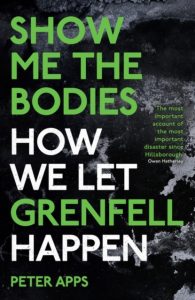
Once again, if you haven’t read it, I urge you to read Pete Apps’ amazing book. Available you-know-where, but also at good bookshops everywhere. If you have read it, read it again.