 Builders Merchants Journal – BMJ Publishing to Builders Merchants and the UK merchanting industry for more than 95 years
To unpack the thinking behind the BMF’s Branch of the Future Report, Fiona Russell Horne sat down with Tom Diplock, partner at L.E.K Consulting, which conducted the research supporting the report. They discussed how the work originated, what it reveals about the sector’s evolution, and why the report should be seen as a practical framework rather than a fixed template for the industry.
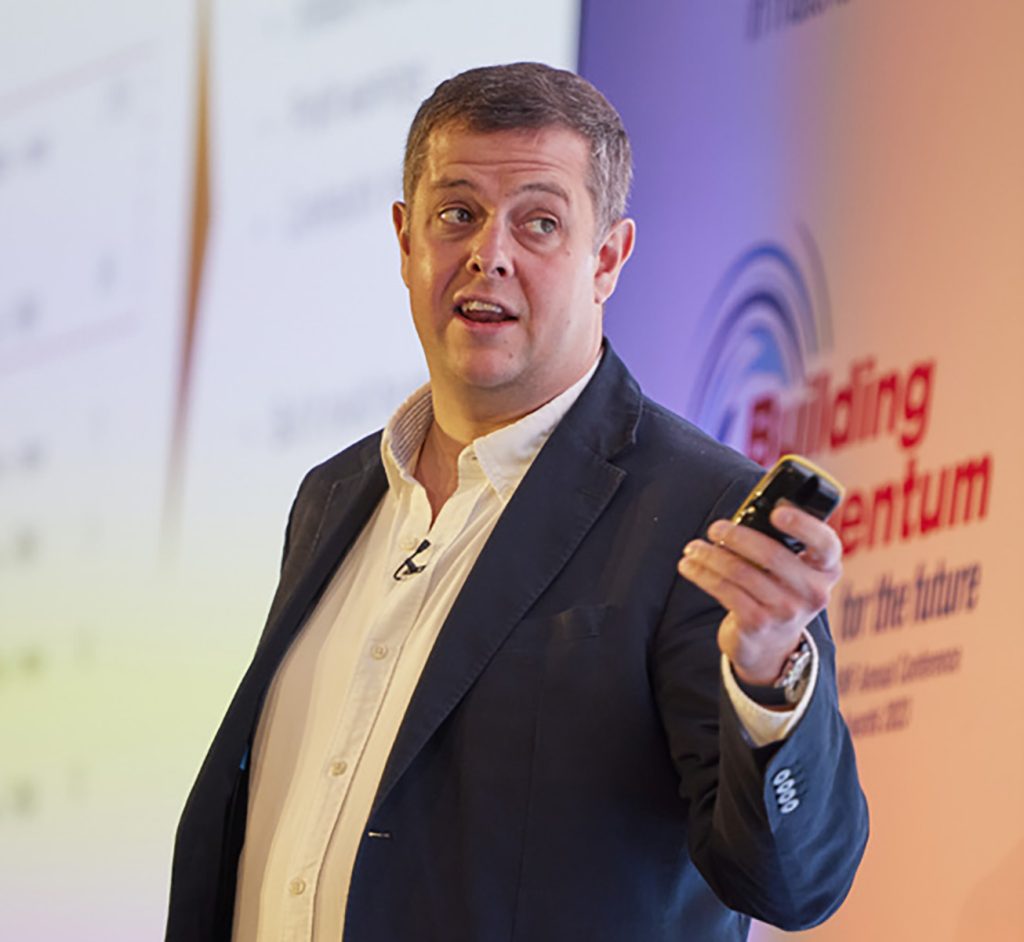
Fiona Russell Horne: How did L.E.K become involved with the ‘Branch of the Future’?
Tom Diplock: I’ve known John Newcombe at the BMF for a long time, and a few years ago I spoke at one of their conferences. LEK’s focus is helping businesses think strategically about future growth, change and resilience. The BMF plays an important role in helping merchants evolve and adapt to the challenges facing the industry.
The genesis of the project came through one of the many BMF forums, where issues such as health and safety, wellbeing, and technological change were already underway as major themes. There was a widespread recognition that the sector is facing substantial shift, in customer expectations, in available technology, in operational requirements.
The BMF wanted to anchor a conversation around what the builder’s merchant branch of the future should become. Not a theoretical exercise, but a practical one: What will be required of merchants in the next few years? What opportunities exist to do things differently? That was the context in which we began: identifying the challenges, mapping the opportunities, and creating a framework for thinking about where the sector is heading.
FRH: So, the report was designed more as a tool to stimulate thinking than as a definitive verdict on the industry?
TD: Exactly. It’s not intended to be a comprehensive survey of the entire sector. Its purpose is to identify opportunities, showcase examples, and give the industry a structure through which to think about change. We wanted it to be practical, and grounded in real examples of things merchants are already doing differently today.
The BMF was instrumental in helping us find these cases. We also drew on our own work in the UK and internationally, and on parallels from adjacent sectors, cautiously, because builders merchants are not retailers, and many bridle at the comparison. But certain lessons around personalisation, digital tools, range extension or customer experience are applicable with adaptation.
FRH: When you conducted visits and interviews, how did you choose who to speak with?
TD: We approached the research with a deliberately open mind. Many businesses are doing interesting work; some shout about it more than others. It would have been remiss of us not to understand what the more visible innovators were doing, but we fully expect there are pockets of innovation we didn’t capture. It’s not meant to catalogue every initiative nationwide. One of the BMF’s strengths is bringing people together. We hope the report becomes the starting point for conversations, not the final word.
FRH: There’s been a bit of a perception in the industry that the report is very prescriptive. But you seem to see it as more flexible?
TD: Absolutely. Striking the balance was difficult, because all the examples we use are real, and all are happening somewhere in the sector today. But that doesn’t mean every branch should or could adopt all of them. It’s a framework, more of a set of ideas, principles and practical examples. Some elements will eventually become universal. Others will apply only in certain businesses or locations. Some may never be right for a particular merchant. It’s more like a cookbook than a single recipe. Each merchant has different priorities, customer bases, operational constraints and starting points. The report gives them the ingredients, not the instructions to make a single dish.
The report is also designed to be modular: each pillar can be read independently by the person for whom it’s most relevant. We debated breadth vs. depth endlessly. A shorter, more theoretical document would have been easier to produce, but it wouldn’t have been as useful. The examples give it weight and make it real. You can read the first few pages for the big picture and then dip into the sections that matter most to you.
FRH: Seeing an example in action makes all the difference. Branches love visiting each other. Did that influence your approach?
TD: Completely. This is a relationship-driven industry. People like talking about what they’ve implemented, and they like seeing things firsthand. If we highlight something Bradfords does, for instance, it’s likely someone will call them up and say, “Can I come and see this?” That’s a positive outcome. The report is meant to spark those interactions and offer inspiration rather than instructions.
FRH: How did you identify what customers want from merchants in the future?
TD: We relied heavily on empirical data. LEK runs an annual tradesperson and contractor survey across major European markets, including the UK, with 1,000 respondents each year. That includes data pre- and post-Covid. There are also valuable sources within the industry, for instance, the Jewson Trade Trends reports and other merchant publications. It’s true that segmenting customers into “older” and “younger” tradespeople is reductive, because there’s variation in every group. But the directional shifts are clear. If they can research, buy and receive products in frictionless ways as consumers, they expect the same in their day-to-day trade lives.
FRH: How do you reconcile the push towards digital with the continued importance of physical locations?
TD: For merchants, branches serve crucial functions: product fulfilment, speed, advice, and customer relationships. Nothing in the report suggests an imminent shift to an all-e-commerce model. Instead, it’s about using technology to enhance the branch experience, for example, giving staff tools that make customer service better, faster and more informed.
FRH: Were there any surprises in the research? Anything you didn’t expect to find?
TD: A couple of things did surprise me. One was the degree to which technology has already been adopted across the sector. Many UK merchants are further along than expected, particularly around tools such as dropship models via Virtualstock, or e-commerce functionality more generally. The digital and customer-facing innovations were both more numerous, and more advanced than we had assumed.
FRH: Covid saw digital adoption rise. How different do you think the report might have looked without that period of disruption?
TD: It’s a fascinating question, and impossible to answer definitively. But it’s clear Covid was an accelerant rather than a creator of trends. Our long-running survey tracks preferences for collection vs. delivery and online vs. offline ordering. During Covid, online ordering spiked dramatically. Once lockdown eased, some of that reverted, but not entirely. Covid changed behaviours, but it also changed expectations. And companies like have set a benchmark. When someone can switch queues at Screwfix by ordering on their phone, it influences what they expect elsewhere.
FRH: Some things in the report are not new ideas. Do you see the report prompting a renewed look at abandoned ideas?
TD: I hope so. There is, as the saying goes, nothing new under the sun. Steve, who wrote the report, pulled out examples of “branch of the future” thinking from the 1980s. The shapes aren’t dramatically different; the technology is. The core mission remains unchanged: meet customer needs in the most efficient, effective and safe way possible.
Many ideas that didn’t take hold 10 or 20 years ago may now be viable because the technology, cost base or customer expectations have caught up. If the report nudges merchants to revisit ideas that weren’t right then but might be right now, that’s a real win. It’s a set of opportunities. And every merchant will build their version of it differently.