 Builders Merchants Journal – BMJ Publishing to Builders Merchants and the UK merchanting industry for more than 95 years
Love looks not with the eyes, but with the mind
Birds do it. Bees do it. Even educated fleas do it. There’s nothing wrong with ‘it’. Without ‘it’, life would be a lot less fun and, eventually, would peter out. So why do some people have so much of a problem with ‘it’?
The two high profile entertainment industry cases of the last week have less to do with sex – there I said it – than they do with power. Why and how did Russell Brand get away with everything he did for so long? Because he could. Because too many people around him let him get away with things. They turned the other way and pretended that, because it wasn’t happening to them or their loved ones, it wasn’t happening at all.
When Brand and Jonathan Ross were sacked from Radio 2 for Sachsgate, they took Lesley Douglas, the female controller of Radio 2 down with them. It was on her watch that the ethos of ‘Don’t upset the talent’ really took hold, and allowed such behaviour to become almost the norm.
David Walliams, too, did stuff because he could. It’s simply not good enough for people to say that his sleaziness – because, that, so far, is all he’s guilty of rather than anything actually criminal – was an ‘open secret’ that everyone knew about. Like Jimmy Saville, he hid in plain sight. Fair play to Lucy Beaumont for risking her career by blowing the whistle when she discovered some of his behaviour.
To repeat myself, it’s very rarely about the sex. It’s about power.
Stuff like this has always gone on, it’s just that, in the age of social media, it’s been amplified. Andrew Tate and his ilk are a case in point. Young boys – and girls – are now able to access pornography with an ease and on a scale that is incomprehensible to those of us who grew up in the 1970s. What are they learning about consent, about relationships, about treating everyone with kindness and respect? Jack Thorne and Stephen Graham’s astonishing, outstanding, award-winning tv series Adolescence tells us the answer to that.
This isn’t about every man, of course it isn’t. But, in a sense, it is about everyone, because we all, men and women, have a duty to call out wrong behaviour when we see it. And we all have a responsibility to encourage young girls, and young boys, to have the courage to stand up for themselves and others when they feel something is wrong.
The Mayor of London’s Say Maaate to a Mate campaign is a great example, of something that encourages everyone to stand up and speak out when they see something that just isn’t right, even if, especially if, it’s from one of their friends.
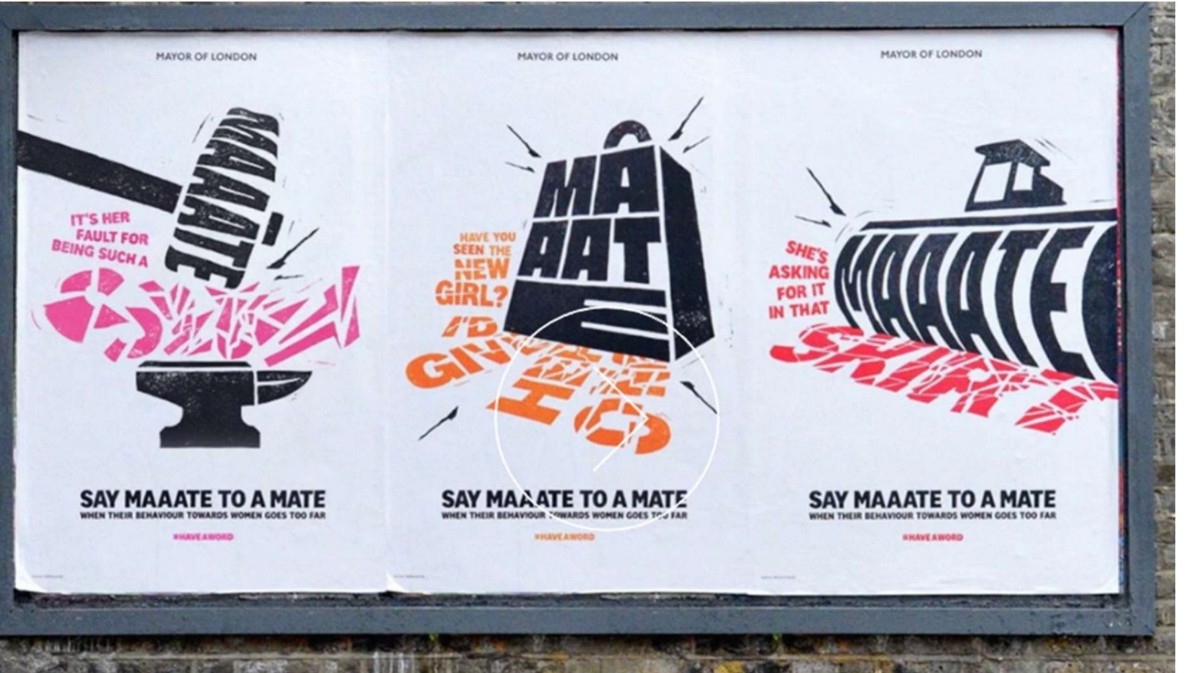
The entertainment industry, by its very nature, is probably rife with this sort of behaviour. But other sectors have their issues too. As I write this, I’m listening to the news that the Metropolitan Police has been found to have repeatedly missed opportunities to stop a predatory detective inspector from sexually exploiting women whose cases he investigated.
Organisations and businesses across all sectors, including this one, have a duty to call out behaviour that does not come up to an acceptable standard. Moreover, they have a duty to set the standards they require of their employees, and uphold those, across all levels, from factory floor, building site or yard right up to CEO.
We talk a lot about needing to encourage a wider diversity in this industry. If we don’t ensure that it is a sector that all young people, male and female, across all cultures, feel comfortable joining and remaining in, that diversity growth simply won’t happen.
The human race requires us to continue to get it on, in order to survive as a species. If we have respect for each other, understand each other’s boundaries, and act like decent human beings then doing as the educated fleas do will not be problematic. Is that too much to ask?
And, just because we lost her 10 years ago, and the world is a less funny place as a result, allow me, gentle readers, to share with you the very, very best ‘let’s get it on’ ever.