
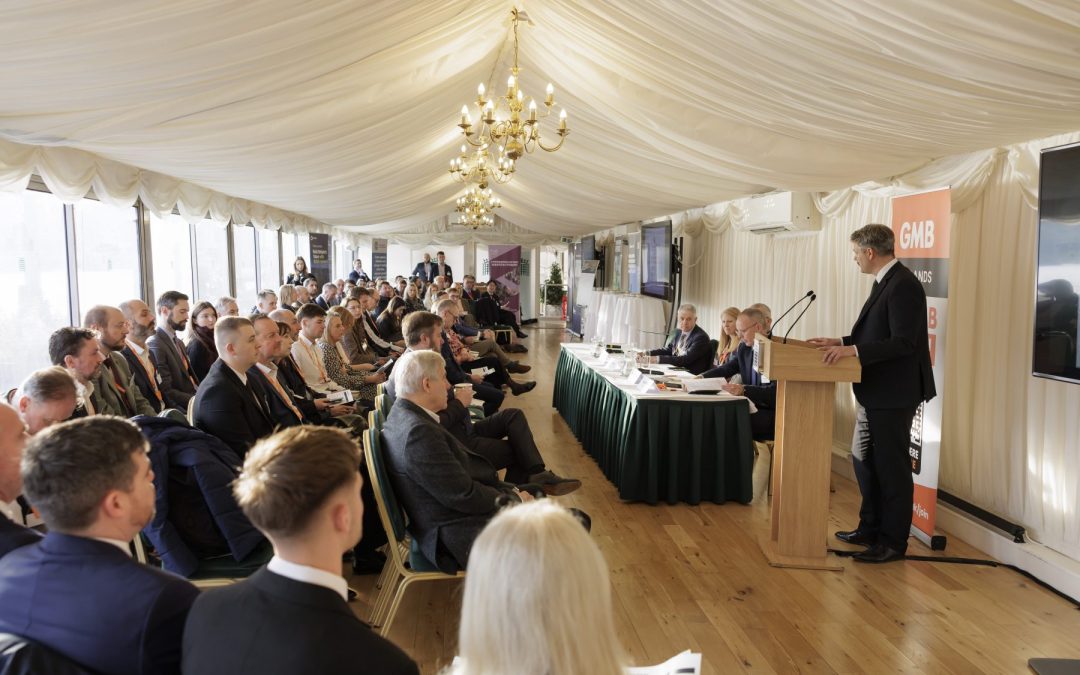
The UK’s cement and lime industry came together in Parliament yesterday with a united message: the Government must commit to carbon capture technology if Britain is to keep making its own essential construction materials.
Taking part in the Cement and Lime Summit, hosted in Westminster on Wednesday, several of the country’s major producers – Breedon, Tarmac, Holcim and Buxton Lime amongst others – joined unions, trade associations and parliamentarians to discuss the threats and opportunities facing the sector.
Speakers outlined the threats facing the UK’s cement and lime sectors, including higher-carbon imports, uncompetitive carbon costs and the risk of losing a vital sovereign capability. They stressed the need for investment in decarbonisation, including through large-scale carbon capture and storage projects such as Peak Cluster and Morecambe Net Zero (MNZ).
Attendees pledged their support by signing The Cement and Lime Charter, which commits to protecting and decarbonising the UK’s cement and lime industries. Attendees included MPs from across the House, as well as the major trade unions GMB, TUC and Unite.
Peak Cluster CEO, David Parkin, said the industry is at a critical point and the Government must provide greater certainty on carbon capture to safeguard British production, jobs and industrial capability.
“Put simply, there is no credible pathway to securing the long-term future of the UK’s cement and lime industry without carbon capture and storage.
“Unless we decarbonise the industry, Britain faces a very real risk of losing production, jobs and investment overseas, while becoming increasingly reliant on imported materials.
“The message collectively across the industry is resounding – with the right support for carbon capture, Britain can make its own sustainable cement and lime for generations to come.”